Snacks: A Complete Guide to Choosing Healthy, Easy, and Delicious Snacks
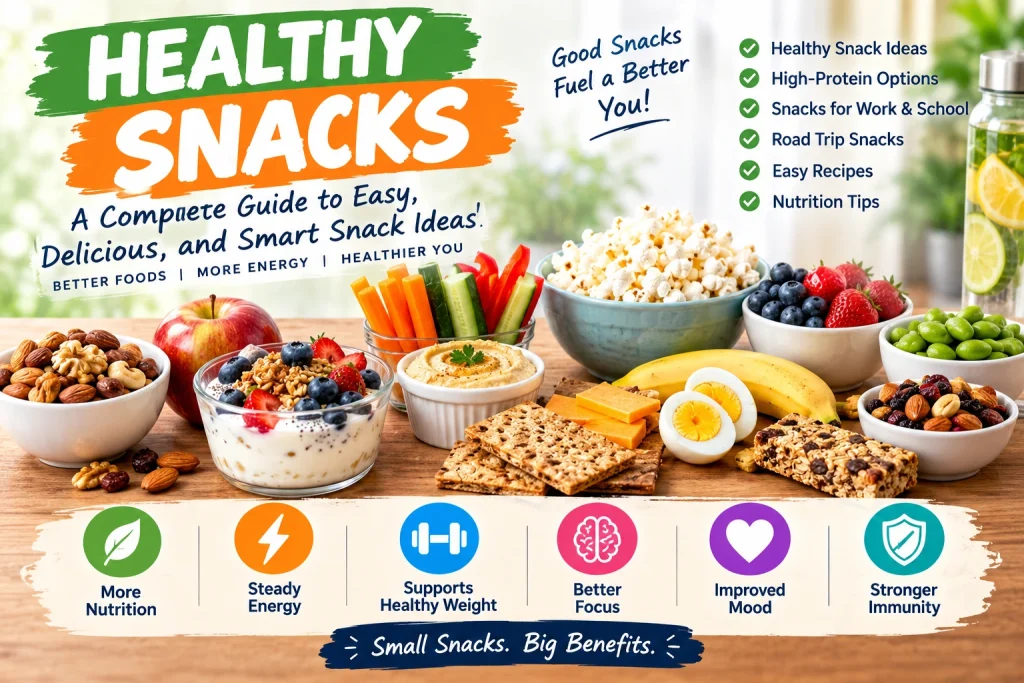
Healthy Snacks: A Complete Guide to Easy, Delicious, and Smart Snack Ideas
Snacks are a simple part of everyday life. Whether you’re grabbing something between meetings, packing food for school, heading out on a road trip, or relaxing at home after dinner, the right snack can be convenient, satisfying, and enjoyable.
But with thousands of snack options available in American grocery stores, convenience stores, vending machines, and online shops, choosing what to eat isn’t always easy. Some snacks are packed with protein and fiber, while others contain large amounts of added sugar, sodium, or saturated fat.
The good news is that you don’t have to completely give up your favorite treats to make smarter snack choices. Understanding portions, reading Nutrition Facts labels, and combining different types of foods can help you build a snack routine that fits your lifestyle.
In this guide, we’ll explore what snacks are, the different types of snacks, healthy snack ideas, high-protein snacks, quick snacks for busy days, snacks for kids, road-trip snacks, and how to read snack nutrition labels.
What Is a Snack?
A snack is a small amount of food or drink consumed between regular meals.
Unlike breakfast, lunch, or dinner, a snack is generally intended to be a smaller eating occasion. Snacks can be homemade or packaged and can range from something as simple as fresh fruit to more substantial combinations such as Greek yogurt with berries and nuts.
Snacking habits vary from person to person.
Some people snack because they become hungry between meals. Others may eat a snack before exercise, during a long workday, while traveling, or simply because they enjoy a particular food.
According to the 2025 Dietary Guidelines Advisory Committee’s scientific report, snacking is very common in the United States. The report found that 86% of adults age 20 and older reported consuming at least one snack on a given day.
That makes snacks an important part of the overall eating pattern for many Americans.
Why Do People Eat Snacks?
There isn’t one reason everyone snacks.
Common reasons include:
- Hunger between meals
- Long gaps between meals
- Physical activity
- Work schedules
- School schedules
- Travel
- Convenience
- Social occasions
- Enjoyment
- Cravings
- Personal eating preferences
For example, someone working an eight-hour shift may need a convenient afternoon snack, while a person going for an evening workout may prefer a small snack beforehand.
The key is understanding what you’re looking for from a snack.
Are you simply hungry? Do you need something portable? Are you looking for protein? Do you want something sweet? Or are you looking for a satisfying option that won’t leave you hungry again shortly afterward?
Answering those questions can make snack choices much easier.
What Makes a Good Snack?
There is no single food that qualifies as the “perfect snack.”
A useful snack depends on your personal needs, dietary preferences, schedule, and overall eating pattern.
However, many people find snacks more satisfying when they combine foods with different nutritional characteristics.
For example:
Apple + peanut butter
This combination provides the crisp sweetness of fruit along with protein and fat from peanut butter.
Another example is:
Greek yogurt + berries
This gives you a creamy, high-protein food paired with fruit.
Other combinations include:
- Whole-grain crackers + cheese
- Carrots + hummus
- Banana + peanut butter
- Cottage cheese + fruit
- Nuts + dried fruit
- Popcorn + a piece of fruit
- Whole-grain toast + avocado
The goal isn’t necessarily to make every snack complicated. In fact, some of the easiest snacks require almost no preparation.
Healthy Snack Ideas
If you’re looking for healthier snack ideas, start with foods that provide useful nutrients while fitting your normal eating habits.
Here are some options to consider.
1. Fresh Fruit
Fruit is one of the easiest snacks to keep around.
Popular choices include:
- Apples
- Bananas
- Oranges
- Grapes
- Strawberries
- Blueberries
- Peaches
- Pears
- Kiwi
- Watermelon
Fresh fruit is naturally sweet, making it a convenient alternative when you’re craving something sugary.
You can also combine fruit with another food for a more substantial snack.
For example:
Apple + peanut butter
or
Berries + Greek yogurt
2. Greek Yogurt
Greek yogurt is a popular snack because it’s creamy, convenient, and can provide protein.
You can eat it plain or add:
- Berries
- Banana
- Chia seeds
- Nuts
- Cinnamon
- Fruit
- A small amount of granola
When choosing flavored yogurt, check the Nutrition Facts label because some varieties contain significant amounts of added sugar.
The FDA recommends using the Nutrition Facts label to compare foods and pay attention to nutrients such as added sugars, sodium, and saturated fat.
3. Nuts and Seeds
Nuts and seeds are convenient because they don’t require refrigeration and are easy to carry.
Popular choices include:
- Almonds
- Walnuts
- Pistachios
- Cashews
- Pecans
- Pumpkin seeds
- Sunflower seeds
Because nuts and seeds can be calorie-dense, portion awareness can be useful.
Instead of eating directly from a large container, consider putting a serving into a small bowl or reusable container.
4. Popcorn
Popcorn can be an enjoyable snack, especially when you’re watching a movie or relaxing at home.
Air-popped popcorn can be a simple whole-grain snack. However, preparation matters.
Some packaged popcorn products can contain substantial amounts of sodium, saturated fat, or added ingredients.
Check the Nutrition Facts label and remember that the listed nutrition information applies to the stated serving size.
5. Vegetables With Hummus
If you prefer savory snacks, try pairing vegetables with hummus.
Some easy combinations include:
- Carrots + hummus
- Cucumber + hummus
- Bell peppers + hummus
- Celery + hummus
- Cherry tomatoes + hummus
This is also a convenient option for lunch boxes or afternoon snacks.
6. Whole-Grain Crackers and Cheese
Whole-grain crackers paired with cheese can make a quick and satisfying snack.
You can add:
- Grapes
- Apple slices
- Pear slices
- Cherry tomatoes
This combination is especially useful when you want something more substantial than a piece of fruit.
7. Hard-Boiled Eggs
Hard-boiled eggs are portable and relatively easy to prepare ahead of time.
They can be eaten alone or paired with:
- Whole-grain toast
- Fruit
- Vegetables
- Avocado
Keep refrigerated foods properly chilled and follow food-safety practices when preparing snacks in advance.
8. Cottage Cheese and Fruit
Cottage cheese can be paired with both sweet and savory foods.
For a sweet snack, try:
Cottage cheese + berries
For a savory option:
Cottage cheese + tomatoes + black pepper
This gives you plenty of flexibility without requiring a complicated recipe.
High-Protein Snack Ideas
Protein is one of the nutrients many people consider when choosing a filling snack.
Some high-protein snack options include:
- Greek yogurt
- Cottage cheese
- Hard-boiled eggs
- Cheese
- Edamame
- Roasted chickpeas
- Tuna packets
- Peanut butter
- Nuts
- Seeds
- Milk
- Protein-rich snack bars
However, “high protein” doesn’t automatically mean a food is the best choice for every person.
It’s still useful to look at the entire Nutrition Facts label and ingredient list.
Easy Snacks for Busy Workdays
American work schedules can make regular meals difficult.
If you spend most of your day at an office, working from home, driving, or moving between appointments, having easy snacks available can be convenient.
Here are some simple options:
Desk-Friendly Snacks
- Almonds
- Pistachios
- Whole-grain crackers
- Apples
- Protein bars
- Roasted chickpeas
- Dried fruit
- Peanut butter packets
Refrigerator Snacks
- Greek yogurt
- Cheese sticks
- Cottage cheese
- Fresh fruit
- Cut vegetables
- Hard-boiled eggs
A useful strategy is to prepare several snacks at the beginning of the week so you aren’t forced to make a decision when you’re already hungry.
Healthy Snacks for Kids
Children often need convenient snacks between meals, especially during school, sports, or other activities.
Some simple choices include:
- Apple slices
- Banana
- Berries
- Yogurt
- Cheese
- Whole-grain crackers
- Carrot sticks
- Cucumber slices
- Peanut butter with fruit
- Hummus with vegetables
- Homemade trail mix
For younger children, foods should be prepared in an age-appropriate way to reduce choking risks. Parents and caregivers should also consider allergies and individual dietary needs.
Rather than labeling foods as completely “good” or “bad,” it can be more useful to teach children about variety, portions, and balanced eating.
Best Snacks for Road Trips
Road trips are one of the situations where snacks become especially useful.
Instead of relying entirely on fast food or gas-station snacks, you can pack a small cooler and a few shelf-stable foods.
Road Trip Snack Ideas
Fresh foods:
- Apples
- Grapes
- Berries
- Baby carrots
- Cheese
- Yogurt
Shelf-stable foods:
- Nuts
- Trail mix
- Whole-grain crackers
- Popcorn
- Granola
- Peanut butter packets
- Dried fruit
For longer trips, use an insulated cooler and appropriate cold-storage practices for perishable foods.
Best Snacks for Movie Night
Movie night doesn’t have to mean eating the same snacks every time.
Classic options include:
- Popcorn
- Pretzels
- Tortilla chips
- Salsa
- Nuts
- Fruit
- Dark chocolate
- Cheese and crackers
If you’re watching a movie with friends or family, serving snacks in smaller bowls can make sharing easier and may help you keep track of how much you’re eating.
Sweet Snack Ideas
If you have a sweet tooth, you don’t necessarily need to avoid sweet foods altogether.
Try options such as:
- Fresh berries
- Apple slices with peanut butter
- Greek yogurt with fruit
- Banana with cinnamon
- Frozen grapes
- Homemade oatmeal bites
- Fruit smoothies
- Dark chocolate with nuts
- Chia pudding
The FDA notes that added sugars can be included in an overall healthy eating pattern, but the Dietary Guidelines recommend limiting calories from added sugars to less than 10% of total calories per day.
This is one reason reading the Added Sugars line on a Nutrition Facts label can be useful.
Savory Snack Ideas
Not everyone wants something sweet.
If you prefer salty or savory foods, consider:
- Hummus and vegetables
- Popcorn
- Roasted chickpeas
- Cheese and crackers
- Edamame
- Hard-boiled eggs
- Turkey slices
- Nuts
- Avocado toast
- Whole-grain crackers with tuna
Savory snacks can be delicious, but packaged options can sometimes contain a lot of sodium.
The FDA notes that more than 70% of dietary sodium comes from packaged and prepared foods and recommends using the Nutrition Facts label to help make informed choices.
How to Read a Snack Nutrition Label
One of the easiest ways to make smarter packaged-snack choices is to learn how to read the Nutrition Facts label.
You don’t have to analyze every number.
Start with a few key areas.
1. Serving Size
The first thing to check is the serving size.
A package may contain multiple servings.
If you eat two servings, you generally need to account for twice the calories and nutrients listed for one serving.
The FDA specifically advises consumers to pay attention to serving size because the nutrition information on the label is based on that amount.
2. Calories
Calories tell you how much energy one serving provides.
But calories aren’t the only thing that matters.
A snack with the same number of calories as another snack can have a very different nutritional profile.
That’s why it’s useful to consider calories alongside protein, fiber, sodium, saturated fat, and added sugar.
3. Dietary Fiber
Fiber is another useful number to check.
Foods such as fruits, vegetables, whole grains, beans, nuts, and seeds can contribute dietary fiber to your overall diet.
The FDA’s Daily Value for dietary fiber is currently 28 grams per day based on a 2,000-calorie diet.
4. Added Sugars
Added sugar is different from naturally occurring sugar.
For example, the sugar naturally present in a piece of fruit is not considered added sugar.
Added sugars include sugars added during food processing, including ingredients such as sucrose and certain syrups.
The FDA lists 50 grams per day as the Daily Value for added sugars based on a 2,000-calorie diet.
5. Sodium
Sodium is particularly important to watch in many salty packaged snacks.
Foods such as chips, crackers, processed meats, and some prepared snack products can contribute significant amounts of sodium.
The FDA Daily Value for sodium is 2,300 mg per day.
What Does 5% DV or 20% DV Mean?
The “% Daily Value” section of the Nutrition Facts label can make food comparisons easier.
As a general FDA guide:
- 5% DV or less = low
- 20% DV or more = high
This applies to individual nutrients per serving.
For example, if a snack contains 20% DV of sodium per serving, that serving provides a relatively high amount of sodium compared with the Daily Value.
You can use the same approach when comparing different brands.
Are Packaged Snacks Unhealthy?
Not necessarily.
Packaged foods can absolutely be part of an overall eating pattern.
The important thing is to look at the entire product rather than judging it solely by whether it comes in a package.
For example, packaged foods can include:
- Nuts
- Yogurt
- Whole-grain crackers
- Unsweetened applesauce
- Popcorn
- Cheese
- Hummus
- Dried fruit
At the same time, some packaged snack foods are higher in added sugars, sodium, or saturated fat.
The FDA recommends looking at the Nutrition Facts label to identify foods that provide more of the nutrients you want and less of the nutrients you may want to limit.
Snacks vs. Desserts: What’s the Difference?
The line between a snack and dessert isn’t always clear.
Cookies, ice cream, candy, and chocolate can be eaten as snacks, while fruit or yogurt can also be served as dessert.
The difference is often more about when and why you’re eating the food than the food itself.
For example:
A banana eaten at 3 p.m. could be a snack.
A banana with ice cream after dinner could be dessert.
Food doesn’t have to fit into a strict category.
How to Avoid Mindless Snacking
Mindless snacking often happens when you’re distracted by:
- Television
- Social media
- Video games
- Work
- Stress
- Boredom
- Long periods of sitting
One simple strategy is to put your snack into a bowl or container instead of eating directly from the package.
This makes it easier to see how much you’re eating.
Another strategy is to slow down and ask yourself:
“Am I actually hungry, or am I eating because the food is available?”
There is no need to feel guilty about eating for enjoyment. The goal is simply to become more aware of your eating habits.
How to Build a Better Snack Routine
You can make snacking easier by keeping a few dependable foods available.
Try creating three categories:
Fruit
Choose two or three fruits you enjoy.
Protein or Healthy Fats
Keep foods such as:
- Yogurt
- Nuts
- Seeds
- Cheese
- Peanut butter
- Eggs
Convenient Carbohydrates
Consider:
- Whole-grain crackers
- Oatmeal
- Whole-grain toast
- Popcorn
Then mix and match.
For example:
Apple + peanut butter
Greek yogurt + berries
Whole-grain crackers + cheese
Popcorn + fruit
This system gives you variety without requiring a complicated meal plan.
Easy Homemade Snack Recipes
Peanut Butter Banana Bites
Slice a banana and add a small amount of peanut butter between slices.
For extra crunch, you can add chopped nuts.
Yogurt Berry Bowl
Combine:
- Plain or lightly sweetened Greek yogurt
- Strawberries
- Blueberries
- A small amount of granola
Mix everything together for a quick breakfast-style snack.
Homemade Trail Mix
Combine:
- Almonds
- Pumpkin seeds
- Unsweetened dried fruit
- Whole-grain cereal
- A small amount of dark chocolate
Make a batch and divide it into individual portions.
Simple Avocado Toast
Toast whole-grain bread and add mashed avocado.
Top with:
- Black pepper
- Tomato
- Everything seasoning
- A boiled egg
This can work as a snack or a light meal depending on portion size.
Snacks for Different Situations
| Situation | Snack Ideas |
|---|---|
| Work | Greek yogurt, nuts, fruit |
| School | Fruit, yogurt, whole-grain crackers |
| Road trip | Trail mix, apples, popcorn |
| Movie night | Popcorn, nuts, fruit |
| Before exercise | Banana, toast, yogurt |
| After exercise | Greek yogurt, eggs, cottage cheese |
| Late afternoon | Apple + peanut butter |
| Sweet craving | Berries + yogurt |
| Savory craving | Hummus + vegetables |
| Outdoor activities | Nuts, dried fruit, granola |
Common Snack Mistakes
Eating Directly From the Package
Large bags can make it difficult to know how much you’ve eaten.
Use a bowl or container instead.
Ignoring Serving Sizes
A snack package may contain multiple servings.
Always check the serving information.
Focusing Only on Calories
Calories are useful, but they’re only one part of the nutritional picture.
Consider protein, fiber, sodium, saturated fat, and added sugars too.
Choosing Snacks Only Because They’re Marketed as “Healthy”
Words such as “natural,” “organic,” “protein,” or “multigrain” don’t tell you everything about a product.
Check the actual Nutrition Facts label and ingredient list.
Frequently Asked Questions About Snacks
What is the healthiest snack?
There isn’t one universally healthiest snack. Good choices can include fruits, vegetables, yogurt, nuts, seeds, whole grains, eggs, and other foods that fit your individual dietary needs.
What are good snacks for weight management?
Options that provide protein, fiber, or both may be more satisfying for some people. Examples include Greek yogurt, fruit with peanut butter, vegetables with hummus, eggs, and portioned nuts.
Individual calorie needs vary, so there isn’t a single snack portion that works for everyone.
What are good high-protein snacks?
Greek yogurt, cottage cheese, eggs, cheese, edamame, nuts, seeds, and some protein bars are examples of protein-containing snacks.
Are snacks necessary every day?
Not necessarily. Some people naturally prefer three meals without snacks, while others enjoy or need snacks between meals. Your schedule, hunger, activity level, and overall eating pattern all matter.
What snacks are good for kids?
Fruit, yogurt, cheese, vegetables with hummus, whole-grain crackers, and age-appropriate nut or seed products can be options. Always consider allergies, age, and choking risks.
Are chips and cookies okay as snacks?
They can fit into an overall eating pattern, but they may provide less nutritional value than snacks such as fruit, vegetables, nuts, or yogurt. Portion size and overall diet matter.
How can I make snacks more filling?
Combining foods can help create a more substantial snack. For example, pair fruit with nuts or peanut butter, or vegetables with hummus.
What should I look for on a snack label?
Start with serving size, calories, protein, dietary fiber, sodium, saturated fat, and added sugars. The % Daily Value can help you compare products.
Final Thoughts
Snacking doesn’t have to be complicated.
The best snack for you depends on your hunger, schedule, preferences, activity level, and overall diet. Some days you may want fresh fruit and yogurt. Other days, popcorn, nuts, cheese, or a favorite treat may be exactly what you’re looking for.
A practical approach is to keep a variety of foods available and learn how to read Nutrition Facts labels. Pairing foods such as fruit with nuts, vegetables with hummus, or yogurt with berries can make simple snacks more satisfying.
Most importantly, don’t think of snacks as automatically “good” or “bad.” Look at the bigger picture of your overall eating pattern.
With a little planning, snacks can be easy, convenient, delicious, and nutritious—whether you’re at home, at work, traveling across the country, or simply taking a break during a busy day.