Healthy Foods to Eat and Foods to Limit: A Simple Guide to Better Health
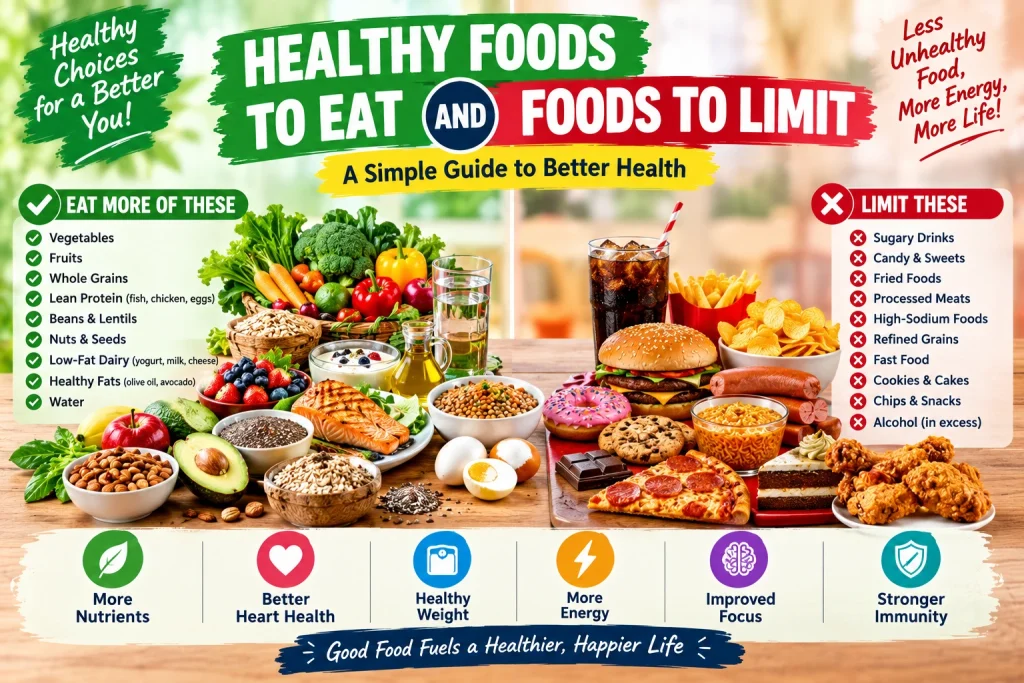
Choosing more nutritious foods and limiting excess sugar, salt, saturated fat, and heavily processed foods can help create a balanced eating pattern.
Healthy Foods to Eat and Foods to Limit: A Simple Guide to Better Health
Eating healthy does not mean giving up rice, meat, snacks, or the foods you love. A healthy diet is about balance, variety, portion size, and making better choices most of the time.
For someone living in the United States, a healthy eating pattern may include foods such as vegetables, fruits, whole grains, beans, fish, eggs, nuts, yogurt, and lean meats. For someone living in Bangladesh, many of the same principles can be followed using familiar foods such as rice, dal, মাছ, শাকসবজি, ফল, ডিম, and chicken.
The important question is not simply “Which food is good?” or “Which food is bad?” Instead, it is better to ask: How often should I eat it, how much should I eat, and how is it prepared?
Health organizations including the World Health Organization and American Heart Association emphasize eating a variety of vegetables, fruits, whole grains, legumes, nuts, and healthier protein sources while limiting excess added sugar, sodium, saturated fat, and industrial trans fat.
This guide explains which foods are generally better for everyday eating, which foods are better to limit, and how to build a healthier plate using both American and Bangladeshi foods.
Important: This is general nutrition information, not personalized medical advice. People with diabetes, kidney disease, food allergies, pregnancy-related nutrition needs, or other medical conditions should follow advice from their healthcare professional.
What Does “Healthy Food” Really Mean?
There is no single food that can make someone healthy.
A healthy diet is a pattern of eating that provides the body with enough energy, protein, vitamins, minerals, fiber, and other nutrients without regularly providing excessive amounts of added sugar, sodium, saturated fat, and unhealthy fats.
The WHO says a healthy diet generally includes fruits, vegetables, legumes, nuts, and whole grains, while limiting foods high in salt, free sugars, saturated fat, and trans fat.
The American Heart Association similarly recommends a dietary pattern built around vegetables, fruits, whole grains, healthy protein sources, nuts, legumes, and healthier unsaturated fats.
In simple terms:
Eat more variety. Eat more whole or minimally processed foods. Limit highly sugary, salty, and heavily processed foods.
Foods You Should Eat More Often
1. Vegetables
Vegetables should be a major part of a healthy eating pattern.
Good choices include:
- Spinach
- Broccoli
- Carrots
- Cauliflower
- Cabbage
- Tomatoes
- Bell peppers
- Cucumbers
- Eggplant
- Green beans
- Pumpkin
- Okra
- Sweet potatoes
- Leafy greens
For Bangladeshi families, vegetables can include familiar foods such as লাল শাক, পালং শাক, পুঁই শাক, লাউ, ঝিঙে, পটল, বেগুন, ফুলকপি, বাঁধাকপি, and মিষ্টি কুমড়া.
You don’t need to eat only expensive imported vegetables.
Local and seasonal vegetables can be excellent choices.
The American Heart Association notes that fresh, frozen, canned, and dried produce can all fit into a healthy eating pattern. For canned or frozen products, checking sodium and added sugar is useful.
Easy ways to eat more vegetables
Instead of making vegetables a small side dish, make them part of the main meal.
For example:
Rice + dal + mixed vegetables + fish
can be a more balanced meal than:
Large portion of rice + fried food only.
2. Fruits
Fruit is naturally sweet and provides important nutrients and dietary fiber.
Good choices include:
- Apples
- Bananas
- Oranges
- Guava
- Papaya
- Mango
- Pineapple
- Watermelon
- Berries
- Grapes
- Pears
- Jackfruit
For people in Bangladesh, fruits such as পেয়ারা, পেঁপে, আম, কলা, কাঁঠাল, তরমুজ, কমলা, and আনারস can easily be included.
Whole fruit is generally a better everyday choice than sugary fruit drinks.
For example:
Eat an orange
instead of:
Drink a sugary orange-flavored beverage.
The American Heart Association recommends including a wide variety of fruits and vegetables and notes that whole fruits provide fiber and other nutrients.
3. Whole Grains
Carbohydrates are not automatically unhealthy.
The type and amount matter.
Whole grains generally contain more of the grain’s natural components and can provide more fiber than refined grains.
Examples include:
- Oats
- Brown rice
- Whole-wheat bread
- Whole-grain pasta
- Barley
- Whole-grain cereals
For Americans, oatmeal and whole-grain bread can be easy choices.
For Bangladeshis, rice is a major staple, so you don’t necessarily have to eliminate it.
Instead, consider:
- Reasonable rice portions
- More vegetables
- Dal or beans
- Fish or another protein
- Less deep-fried food
Brown rice can be an option, but you don’t have to completely stop eating white rice to eat healthier.
The WHO specifically recognizes rice and other staple grains as part of healthy eating patterns while emphasizing variety and balance.
4. Dal, Beans, and Other Legumes
This is one area where American and Bangladeshi eating habits can overlap beautifully.
Legumes include:
- Lentils
- Chickpeas
- Kidney beans
- Black beans
- Green peas
- Soybeans
In Bangladesh, মসুর ডাল is already a familiar food.
Dal can provide protein, fiber, vitamins, and minerals while being relatively affordable.
You can eat dal with:
- Rice
- Vegetables
- Fish
- Eggs
- Whole-grain roti
Instead of thinking of dal as “just a side dish,” it can be an important part of a balanced meal.
5. Fish and Seafood
Fish can be a valuable source of protein and, depending on the species, healthy unsaturated fats.
Examples include:
- Salmon
- Sardines
- Tuna
- Mackerel
- Trout
- Hilsa
- Rohu
- Catla
For Bangladeshis, fish is already a major part of traditional meals.
The preparation method matters.
Compare:
Grilled or lightly cooked fish
with:
Deep-fried fish covered in a large amount of batter or oil.
Both may start with fish, but the overall meal can be very different nutritionally.
The American Heart Association includes fish and seafood among healthy protein choices.
6. Eggs
Eggs are a convenient source of protein and can be prepared in many ways.
Examples include:
- Boiled eggs
- Poached eggs
- Scrambled eggs
- Vegetable omelets
Instead of always deep-frying eggs, try cooking them with less added oil.
An egg with vegetables and whole-grain toast can make a simple breakfast.
In Bangladesh, eggs can also be combined with roti, vegetables, or a moderate portion of rice.
7. Nuts and Seeds
Nuts and seeds can provide protein, fiber, and unsaturated fats.
Examples include:
- Almonds
- Walnuts
- Peanuts
- Pistachios
- Cashews
- Pumpkin seeds
- Sunflower seeds
- Chia seeds
- Flaxseed
Because nuts are energy-dense, portion size matters.
A small handful can be enough for a snack.
Choose unsalted or lightly salted options when possible.
The American Heart Association recommends nuts and seeds as part of a healthy eating pattern.
8. Yogurt and Other Dairy Foods
Yogurt, milk, and other dairy foods can provide protein and calcium.
Good options may include:
- Plain yogurt
- Greek yogurt
- Low-fat milk
- Plain kefir
- Cottage cheese
Watch out for flavored products that contain substantial amounts of added sugar.
Plain yogurt with fruit can be a simple alternative to heavily sweetened yogurt.
People who cannot tolerate lactose can consider lactose-free dairy or appropriate fortified alternatives.
9. Healthy Fats
Your body needs fat.
The goal is not to eliminate fat but to pay attention to the types and amounts.
Sources of unsaturated fats include:
- Avocado
- Nuts
- Seeds
- Fish
- Olive oil
- Canola oil
- Sunflower oil
- Soybean oil
The American Heart Association recommends replacing sources of saturated fat with healthier unsaturated fats.
Foods You Should Limit
Healthy eating does not mean that you can never eat dessert, fried chicken, biryani, chips, or cake.
Instead, foods that are high in added sugar, sodium, saturated fat, or industrial trans fat are generally better treated as occasional or limited choices rather than the foundation of your everyday diet.
1. Sugary Drinks
One of the easiest places to reduce added sugar is beverages.
Examples include:
- Regular soda
- Sweetened iced tea
- Energy drinks
- Sugary coffee drinks
- Sweetened milk drinks
- Fruit-flavored beverages
- Syrups and sweetened drinks
The American Heart Association recommends limiting sugar-sweetened drinks and added sugars.
Water is usually the simplest everyday drink.
You can also choose:
- Unsweetened tea
- Unsweetened coffee
- Sparkling water
- Water with lemon or lime
For Bangladesh, this also means being mindful of heavily sweetened tea.
A cup of tea with a little sugar is different from drinking several heavily sweetened cups every day.
2. Candy, Cakes, and Cookies
Cookies, cakes, candy, pastries, and similar foods can be enjoyable.
The issue is frequency and portion size.
These foods can contain significant amounts of:
- Added sugar
- Saturated fat
- Calories
You don’t necessarily need to completely eliminate them.
Instead of eating several servings every day, consider enjoying a smaller portion occasionally.
A healthy diet should be realistic enough that people can maintain it over time.
3. Deep-Fried Foods
Fried foods are popular in both America and Bangladesh.
Examples include:
- French fries
- Fried chicken
- Samosas
- Singara
- Pakora
- Puri
- Fried fish
- Fried chips
- Fried dough snacks
Deep frying can substantially increase the amount of fat and calories in food.
WHO recommends limiting foods high in unhealthy fats and suggests cooking methods such as steaming or boiling instead of frying when possible.
That doesn’t mean you can never enjoy a samosa or fried chicken.
It means these foods are better as occasional choices rather than everyday staples.
4. Processed Meats
Processed meats include foods such as:
- Bacon
- Sausage
- Hot dogs
- Salami
- Pepperoni
- Some deli meats
These foods can contain significant amounts of sodium and saturated fat.
The American Heart Association recommends limiting processed meats as part of a heart-healthy dietary pattern.
Instead, consider more often choosing:
- Fish
- Beans
- Lentils
- Skinless poultry
- Eggs
- Nuts
- Seeds
5. Foods High in Sodium
Too much sodium can be a concern, particularly because sodium is found in many packaged, restaurant, and prepared foods.
Examples can include:
- Instant noodles
- Packaged soups
- Chips
- Processed meats
- Salty sauces
- Pickles
- Some frozen meals
- Fast food
WHO recommends keeping salt intake below 5 grams per day, equivalent to less than about 2 grams of sodium per day for adults.
That doesn’t mean food needs to taste bland.
You can use:
- Garlic
- Ginger
- Lemon
- Lime
- Black pepper
- Chili
- Coriander
- Cumin
- Turmeric
- Other herbs and spices
to add flavor.
6. Foods High in Added Sugar
Added sugar can appear in many foods that don’t necessarily taste like candy.
Look for it in:
- Breakfast cereals
- Sweetened yogurt
- Sauces
- Desserts
- Packaged snacks
- Sweetened coffee
- Soft drinks
- Energy drinks
Reading the Nutrition Facts label can help you identify Added Sugars.
The FDA and American Heart Association both recommend paying attention to added sugars as part of a healthier eating pattern.
7. Foods High in Saturated Fat
Saturated fat is found in foods such as:
- Fatty cuts of meat
- Butter
- Ghee
- Some full-fat dairy products
- Lard
- Palm oil
- Coconut oil
This does not mean every food containing saturated fat must be eliminated.
Rather, health organizations generally recommend emphasizing unsaturated fats and limiting excessive saturated fat.
For example, you can use smaller amounts of butter or ghee while incorporating more fish, nuts, seeds, and plant-based oils.
8. Ultra-Processed Foods
The term “ultra-processed” can sound complicated.
In everyday life, think about foods that are highly formulated and often contain large amounts of added sugar, sodium, or unhealthy fats.
Examples can include:
- Sugary drinks
- Some packaged desserts
- Candy
- Certain chips
- Some processed meat products
- Some highly sweetened snack foods
However, not every processed food is unhealthy.
For example, plain yogurt, frozen vegetables, canned beans, and whole-grain bread are processed in some way but can still fit into a healthy diet.
The American Heart Association specifically notes that processing itself does not automatically make a food unhealthy.
Healthy Food vs. Less Healthy Food: Simple Comparison
| Eat More Often | Limit More Often |
|---|---|
| Vegetables | Deep-fried foods |
| Whole fruits | Sugary drinks |
| Dal and beans | Candy |
| Fish | Processed meats |
| Eggs | Large portions of fatty meat |
| Nuts and seeds | Highly salty snacks |
| Whole grains | Refined snacks |
| Plain yogurt | Heavily sweetened yogurt |
| Lean poultry | Frequent fast food |
| Water | Sugary beverages |
A Healthy Plate for Americans
A simple approach is to build meals around several food groups.
For example:
½ plate: vegetables and fruit
¼ plate: protein
¼ plate: whole grains or another carbohydrate
Protein might be:
- Fish
- Chicken
- Beans
- Lentils
- Eggs
Carbohydrates might be:
- Brown rice
- Whole-grain bread
- Oatmeal
- Whole-grain pasta
- Potatoes
This approach is consistent with the general principles promoted by USDA MyPlate and the American Heart Association.
A Healthy Plate for Bangladesh
You don’t need to copy an American diet to eat healthy.
A traditional Bangladeshi meal can be adjusted.
For example:
Option 1
Rice + dal + mixed vegetables + fish
Option 2
Small/moderate rice portion + chicken + vegetables + salad
Option 3
Roti + vegetable curry + egg + cucumber
Option 4
Rice + fish + leafy greens + dal
The biggest improvements may come from:
- Increasing vegetables
- Including a protein source
- Controlling rice portions based on individual needs
- Reducing excessive oil
- Reducing salt
- Limiting sugary drinks
- Limiting frequent deep-fried foods
You don’t have to abandon traditional Bangladeshi food.
You can make traditional food healthier through portions, ingredients, and cooking methods.
Is Rice Bad for Your Health?
No. Rice itself is not automatically unhealthy.
Rice is a staple food for billions of people around the world.
The bigger issue is often the overall meal.
For example:
Large portion of rice + fried food + sugary drink
is very different from:
Moderate rice portion + vegetables + dal + fish + water.
If you enjoy rice, you can keep eating it while building a more balanced plate.
People with diabetes or other medical conditions may need individualized carbohydrate guidance from a qualified healthcare professional.
Is Sugar Always Bad?
Not all sugar is the same in the context of food.
Fruit naturally contains sugar but also provides fiber, vitamins, minerals, and other nutrients.
Added sugars are different because they are added to foods and beverages during processing or preparation.
The AHA recommends limiting added sugars and identifies soda, sweetened tea and coffee, candy, desserts, and sweetened beverages as common sources.
So instead of worrying about every gram of naturally occurring sugar in fruit, focus particularly on reducing unnecessary added sugar.
Is All Fat Bad?
No.
Fat is an essential nutrient.
The key is choosing healthier sources more often.
Unsaturated fats found in foods such as nuts, seeds, avocado, fish, and many plant oils are generally preferred over large amounts of saturated and industrial trans fats.
So the goal isn’t:
“Eat zero fat.”
It’s:
“Choose better sources and reasonable amounts.”
A Simple 1-Day Healthy Eating Example
Here’s an example that can work as inspiration rather than a strict meal plan.
Breakfast
- Oatmeal
- Banana
- A few nuts
- Unsweetened tea or coffee
Mid-Morning Snack
- Apple or guava
- Plain yogurt
Lunch
- Rice
- Dal
- Mixed vegetables
- Fish
- Salad
Afternoon Snack
- A small handful of nuts
- Fruit
Dinner
- Roti or a moderate serving of rice
- Chicken or fish
- Plenty of vegetables
- Salad
Drink
- Water throughout the day
This isn’t the only healthy way to eat. Your nutritional needs depend on factors such as age, body size, activity level, health conditions, and personal preferences.
10 Simple Rules for Better Eating
If nutrition information feels overwhelming, start with these simple rules:
1. Eat more vegetables.
Try to include vegetables at lunch and dinner.
2. Eat whole fruits.
Choose fruit more often than sugary fruit drinks.
3. Include protein.
Try fish, eggs, beans, lentils, chicken, yogurt, nuts, or other appropriate protein sources.
4. Choose whole grains more often.
Oats, brown rice, whole-grain bread, and other whole grains can provide more fiber than refined alternatives.
5. Drink more water.
Water is usually the simplest everyday beverage.
6. Reduce sugary drinks.
This can be one of the easiest ways to reduce added sugar.
7. Eat less deep-fried food.
Enjoy fried foods occasionally rather than making them everyday staples.
8. Watch your salt.
Use herbs, spices, garlic, ginger, lemon, and other seasonings to add flavor.
9. Read food labels.
Look at serving size, sodium, added sugar, saturated fat, and other relevant nutrients.
10. Don’t aim for perfection.
A healthy eating pattern is about what you do consistently—not one meal, one dessert, or one day.
Frequently Asked Questions
What foods are best for good health?
Vegetables, fruits, whole grains, beans, lentils, nuts, seeds, fish, eggs, lean poultry, and other nutrient-dense foods can form the foundation of a healthy eating pattern.
What foods should I avoid?
There is no universal list of foods that every healthy person must completely avoid. However, foods and drinks high in added sugar, sodium, saturated fat, and industrial trans fat are generally better limited.
Is rice healthy?
Rice can be part of a healthy diet. Portion size and what you eat with the rice are important. Combining rice with vegetables, dal, fish, eggs, or other nutritious foods can create a more balanced meal.
Are fruits healthy even though they contain sugar?
Whole fruits contain naturally occurring sugars along with fiber and other nutrients. They are generally a nutritious part of a balanced diet.
Is fried food bad?
Fried foods can be high in calories and unhealthy fats depending on the food and cooking method. Eating them less often and choosing methods such as baking, grilling, steaming, or roasting more frequently can improve the overall eating pattern.
What is better: American food or Bangladeshi food?
Neither country’s food is automatically healthy or unhealthy. Both cuisines include nutritious foods and foods that are better limited. The ingredients, preparation method, portion size, and overall dietary pattern matter more than the country’s name.
What should I drink every day?
Water is a simple choice for regular hydration. Unsweetened tea and coffee can also fit into a healthy eating pattern. Sugary beverages are better limited.
How can I start eating healthier without spending a lot of money?
Start with affordable foods such as seasonal vegetables, fruits, lentils, beans, eggs, oats, rice, potatoes, and locally available fish. Frozen and canned vegetables can also be useful when fresh produce isn’t available, but compare labels for sodium and added sugar.
Final Thoughts
Healthy eating doesn’t have to be expensive, complicated, or based on a strict diet.
Whether you’re living in New York, Texas, California, Dhaka, Chattogram, Rajshahi, or anywhere else, the basic principles are surprisingly similar.
Eat more vegetables and fruits. Include nutritious protein sources. Choose whole grains more often. Drink water. Use healthier fats. Reduce excessive salt and added sugar. Limit frequent deep-fried foods, processed meats, sugary drinks, and highly processed foods that are high in sodium, sugar, or unhealthy fats.
And remember one important point:
You don’t need to completely stop eating the foods you love.
A healthier lifestyle is usually about making better choices more often and finding a balance you can actually maintain.
For Bangladeshis, that could mean keeping rice and dal while adding more vegetables and fish. For Americans, it might mean replacing some fast-food meals with home-cooked meals or choosing fruit and nuts instead of sugary snacks.
Small changes can add up over time.
The goal isn’t to eat perfectly.
The goal is to eat better, consistently.