Live Nation’s Masterplan: 5 Reasons They Are Building Custom Venues
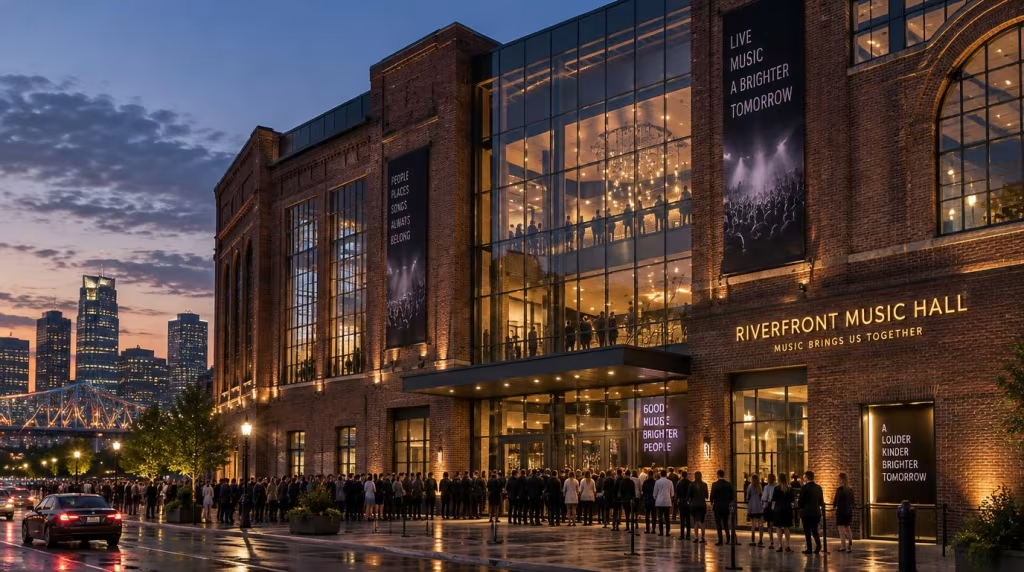
The entertainment giant is shifting its strategy from renting arenas to heavily investing in the architectural design of its own purpose-built concert halls
Beyond Ticketing: Why Live Nation is Going All-In on Designing Its Own Concert Venues
🎸 Quick Takeaways: The Future of Live Entertainment
For decades, the business model of live music promotion was relatively straightforward: an artist announces a tour, a promoter books an available arena or theater, tickets are sold, and the show goes on. No company on Earth has mastered this traditional model quite like Live Nation. From massive stadium tours featuring global pop stars to intimate club gigs, they have been the undisputed heavyweight champions of live entertainment.
However, as reported by Fast Company, a massive strategic evolution is currently underway. The company, often stylized as livenation by internet users and concertgoers, is no longer satisfied with just renting space. Instead, they are pouring hundreds of millions of dollars into acquiring, designing, and building their very own portfolio of concert venues around the world. But why would a company that already dominates the promotion and ticketing sectors want to take on the immense financial risk of commercial real estate and architectural design? The answer lies in total ecosystem control, maximizing ancillary revenue, and fundamentally redefining the live music experience.
The Evolution of Live Nation Entertainment
To understand this aggressive move into real estate, one must look at the company’s historical growth trajectory. The modern iteration of the company, officially known as Live Nation Entertainment, was born out of a colossal merger.
In 2010, the company merged with Ticketmaster in a deal estimated at a staggering $2.5 billion. This merger effectively combined the world’s largest concert promoter with the world’s dominant ticketing platform. This vertical integration meant that Live Nation controlled the artist’s tour, the marketing, and the very platform fans used to buy access. The only piece of the puzzle they did not uniformly control was the physical building where the music was played. Now, they are closing that loop.
Filling the Holes in the Market: The Real Estate Strategy
According to the recent Fast Company analysis, the entertainment giant is focusing specifically on designing and building concert halls to “fill holes in the market.” This strategy is twofold: geographic expansion and capacity optimization.
The Mid-Sized Venue Sweet Spot
While massive 70,000-seat NFL stadiums are great for artists like Taylor Swift or Beyoncé, the vast majority of touring musicians rely on mid-sized venues. There is a critical global shortage of modern, acoustically perfect venues that hold between 1,500 and 5,000 people. Many existing venues in this size range are aging theaters with poor sightlines, inadequate backstage facilities, and outdated sound systems.
By building their own venues, Live Nation can perfectly tailor the capacity to suit the most profitable touring acts, ensuring that artists have premium facilities and fans have an unforgettable, comfortable experience.
| Highlighted Venues | Location | Project Type & Details |
|---|---|---|
| 713 Music Hall | Houston, Texas | Opened in 2021. A massive, modern, purpose-built facility designed specifically for optimal live music acoustics and fan flow. |
| Tides | Hong Kong | A purpose-built 1,500-capacity venue, signaling aggressive expansion into the highly lucrative Asian entertainment market. |
| Paramount Theater | Brooklyn, New York | A massive 2024 revamp and historic renovation, combining modern luxury with classic architectural aesthetics. |

Designing the Ultimate Fan and Artist Experience
When a company like Live Nation decides to build a venue from the ground up, they bring decades of data and touring experience to the architect’s drafting table. They know exactly what annoys fans and what frustrates touring crews.
For the Fans: Acoustics, Sightlines, and Bars
Older venues were often designed for vaudeville theater or cinema, not for the heavy bass and complex lighting rigs of modern concerts. Custom-built livenation venues prioritize acoustics above all else, utilizing sound-absorbing materials to prevent echoing. Furthermore, they are eliminating “obstructed view” seats by designing sloped floors and strategically placed balconies.
Perhaps most importantly from a business perspective, these new designs optimize the placement of bars, merchandise stands, and restrooms. By reducing the time a fan spends waiting in line, they increase customer satisfaction and drastically boost food and beverage revenue—a massive profit center for venue owners.
For the Artists: The Backstage Advantage
The touring industry is grueling. To attract the best artists, promoters must offer the best facilities. Custom-designed venues feature state-of-the-art loading docks that allow tour buses and semi-trucks to unload massive stage sets in a fraction of the time. Backstage areas are designed as luxurious green rooms, complete with high-end catering facilities, private lounges, and comfortable dressing rooms, making the venue a highly desirable stop on any global tour.
The Economics: Why Ownership is a “Meaningful Long-Term Investment”
The Fast Company report quotes company executives describing this architectural push as a “meaningful, long term investment.” When Live Nation acts merely as a promoter renting a building, they have to split the profits with the building owner. The venue owner typically keeps the lucrative parking, food, beverage, and VIP box revenue.
By owning the real estate, the company captures 100% of the revenue generated within the building. Furthermore, owning premium real estate in major cities like Houston, Brooklyn, and Hong Kong adds massive tangible assets to the company’s balance sheet, pleasing Wall Street investors and stabilizing the company against the natural fluctuations of the touring market.
Embracing Local Aesthetics
Despite being a massive global corporation, Live Nation is keenly aware that fans do not want to watch a concert in a sterile, corporate-looking box. As noted in the reports, their new venues are specifically styled to “embrace their locales.”
Instead of a one-size-fits-all approach, a venue in Brooklyn retains the gritty, historic charm of New York, while a venue in Shakopee, Minnesota, might reflect Midwestern architectural sensibilities. This localized design philosophy ensures that the venues feel like an authentic part of the community’s cultural fabric, rather than an invasive corporate structure.
Conclusion: The Unstoppable Behemoth of Live Music
The strategic shift from promotion to physical venue ownership represents the final stage of total industry integration. Live Nation is no longer just connecting fans with artists; they are physically building the very spaces where those connections happen.
While critics may raise concerns about market monopolization, from an experiential standpoint, the results are undeniable. By pouring investments into custom-designed acoustics, streamlined logistics, and localized aesthetics, the company is effectively forcing the entire live music industry to level up. The next time you buy a ticket, grab a drink, and enjoy a flawless sounding concert with perfect sightlines, there is a very high probability you are standing inside a masterclass of Live Nation’s real estate strategy.
Frequently Asked Questions (FAQ)
Does Live Nation own their own concert venues?
Yes. While they have historically rented arenas and clubs, Live Nation is currently investing heavily in designing, building, and owning its own custom concert venues across the globe to control the entire fan experience and capture more revenue.
When did Live Nation merge with Ticketmaster?
The company merged with ticketing giant Ticketmaster in 2010 in a massive deal estimated at $2.5 billion, forming the modern Live Nation Entertainment powerhouse.
What is the 713 Music Hall?
The 713 Music Hall is a state-of-the-art, purpose-built concert venue located in Houston, Texas. Opened in 2021, it is a prime example of the company’s new strategy to design optimal spaces for mid-sized touring artists.
Why is building venues a good business strategy for promoters?
By owning the venue, the promoter does not have to share profits with a landlord. They get to keep 100% of the revenue generated from ticket sales, VIP experiences, food, beverages, and merchandise, making it a highly lucrative long-term investment.