5 Facts: Urgent Hot Dog Recall 2026 Over Severe Risks
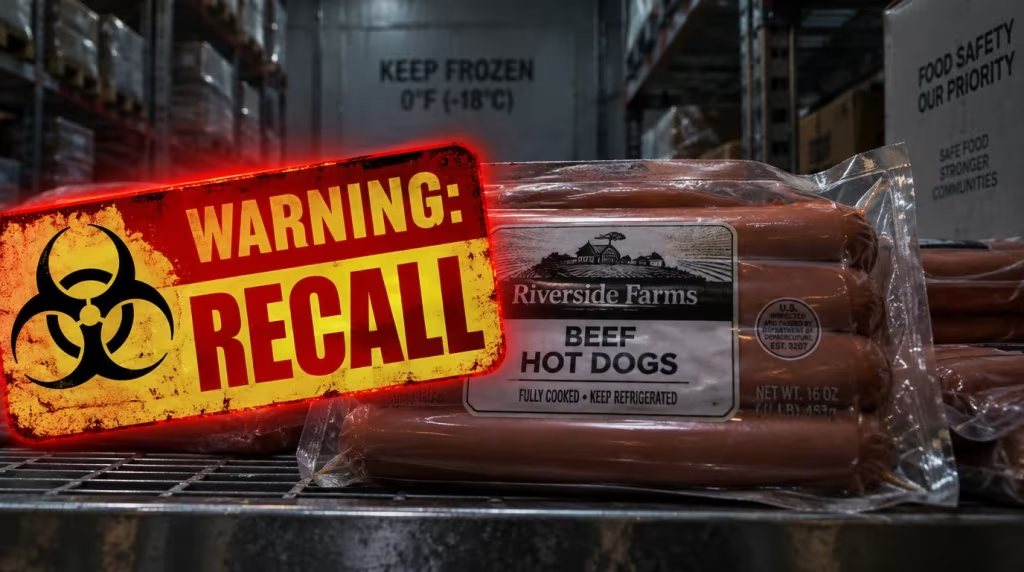
Nearly 1.6 million pounds of ready-to-eat meats, including popular hot dog brands, have been pulled from shelves nationwide over severe safety concerns.
Urgent Nationwide Hot Dog Recall: 1.6 Million Pounds of Meat Pulled Over Severe Health Risks
🚨 Quick Takeaways: Crucial Consumer Alert
InThe massive hot dog recall 2026 is quickly becoming one of the most significant food safety events of the year, sending shockwaves through supermarkets and American households. significant food safety events of the year, a massive nationwide hot dog recall has sent shockwaves through supermarkets, sports stadiums, and American households. Over the weekend, federal officials and Chelsea, Massachusetts-based Kayem Foods Inc. announced the voluntary recall of approximately 1.58 million pounds of ready-to-eat meat and poultry products.
For millions of Americans, hot dogs and sausages are dietary staples, especially during the fall sports season. The inclusion of beloved regional favorites like Fenway Franks—the iconic hot dog served at Boston Red Sox games—has elevated this recall from a standard supply chain hiccup to a major public health and cultural news story. If you have purchased packaged meats recently, it is absolutely critical to check your refrigerators immediately. Here is the comprehensive breakdown of why this happened, the severe risks involved, and what you must do to protect your family.

How Did This Happen? The Anatomy of “Temperature Abuse”
Modern food logistics rely entirely on an unbroken “cold chain.” From the moment meat is processed to the moment it reaches the consumer’s plate, it must be kept at strict, regulated temperatures to prevent the rapid multiplication of dangerous bacteria. According to reports from Boston.com and the Boston Globe, this cold chain was catastrophically broken.
The Warehouse Malfunction
Kayem Foods revealed that they discovered a severe cooling system malfunction at one of their primary storage warehouses. This mechanical failure resulted in what federal regulators term “temperature deviations” or “temperature abuse.” Essentially, massive pallets of ready-to-eat hot dogs, bacon, ham, and chicken sausages were sitting in an environment that was far too warm for safe storage.
Discovered by a Consumer
Alarmingly, this massive logistical failure was not initially caught by internal automated sensors. The discovery was actually made after a retail consumer complained to the company about receiving products that were noticeably “warm” at the point of delivery on October 1. This single complaint triggered an internal investigation by Kayem, working alongside the USDA, which uncovered the horrifying scale of the cooling malfunction.
The Highest Level of Danger: Understanding the USDA’s Warning
Not all food recalls are created equal. Sometimes, a product is recalled simply because an allergen (like soy or milk) was left off the ingredient label. However, the hot dog recall 2026 is far more severe.
As reported by Fox Business, the United States Department of Agriculture’s Food Safety and Inspection Service (FSIS) has assigned this recall its highest-level classification (Class I). A Class I recall is only issued when there is a “reasonable probability that consuming the affected products could cause serious, adverse health consequences or death.”
Why Ready-to-Eat Meats are Highly Vulnerable
Products like Fenway Franks, sliced ham, and pre-cooked bacon are classified as “ready-to-eat.” Because consumers often eat these items with minimal or no additional cooking, the presence of pathogens is incredibly dangerous. When meat is subjected to “temperature abuse,” bacteria such as Listeria monocytogenes, Salmonella, and E. coli can multiply at terrifying rates.
Listeria is of particular concern with hot dogs and deli meats. It can cause severe illness, especially in pregnant women, the elderly, and individuals with weakened immune systems. Furthermore, even if you boil or grill a hot dog that has been temperature-abused, certain bacterial toxins are heat-resistant and can still cause severe food poisoning.
The Scope of the Recall: What Products are Affected?
The sheer volume of the recall—1,584,361 pounds—means that these products have permeated grocery store shelves and deli counters nationwide. While Kayem Foods is based in Chelsea, Massachusetts, their distribution network is vast.
The recall covers 68 different products across multiple lots and expiration dates. The most notable items include:
- Fenway Franks: The legendary official hot dog of the Boston Red Sox.
- Old Tyme Reds: A staple in New England households.
- Assorted Kayem Meats: Various packages of chicken sausages, bacon, brisket, and sliced ham.
| Crucial Dates to Know | Details |
|---|---|
| Production/Storage Dates | Products produced and stored between March 31 and October 7 (and shipped between June 7 and Oct 14). |
| Discovery Date | Consumer complaint filed on October 1. |
| Recall Announcement | Nationwide recall issued over the October 18-19 weekend. |
Corporate Response: Kayem Foods Speaks Out
In the face of a PR and logistical nightmare, Kayem Foods Inc. opted for a rapid, voluntary recall to mitigate potential harm. Matt Monkiewicz, a representative for Kayem, released a statement emphasizing the company’s historical commitment to public safety.
“Our business depends on providing consumers with safe food of the highest quality,” the statement read. By cooperating fully with the USDA’s FSIS, the company is actively trying to pull all affected stock from retail shelves and distribution centers before any widespread outbreaks of illness are reported.
Action Plan: What Consumers Must Do Right Now
If you regularly purchase hot dogs, bacon, or deli meats, you must treat this hot dog recall 2026 with the utmost seriousness. The FSIS is highly concerned that some of these products may already be sitting in consumers’ home refrigerators or freezers.
- Check Your Fridge and Freezer: Immediately look for any Kayem, Fenway Franks, or Old Tyme Reds products.
- Check the USDA Mark of Inspection: Look for the establishment numbers “EST. 78” or “EST. P-78” inside the USDA mark of inspection on the packaging.
- Do Not Consume: Under no circumstances should you eat these products, even if they look and smell normal. Do not attempt to “cook out” the bacteria.
- Throw Away or Return: You must either throw the products in the garbage immediately or return them to the original place of purchase for a full refund.
Conclusion: A Wake-Up Call for the Cold Chain
The recall of 1.6 million pounds of meat is a staggering economic loss and a terrifying near-miss for public health. It highlights the incredible fragility of our modern food supply chain. A single malfunctioning cooler in a Massachusetts warehouse has the potential to sicken thousands of people across the country.
As the USDA continues its investigation, consumers must remain vigilant. Always monitor your local news for food safety alerts, and never hesitate to return a food product if it arrives at your home feeling unusually warm.
Frequently Asked Questions (FAQ)
What products are affected by the hot dog recall 2026?
Kayem Foods Inc. has recalled 68 different products, totaling 1.6 million pounds of meat. The most notable recalled items include Fenway Franks and Old Tyme Reds hot dogs, along with various bacon, ham, and sausage products.
Why were the Fenway Franks recalled?
The products were recalled due to “temperature abuse.” A cooling system malfunction at a storage warehouse meant the meats were stored at unsafe, warm temperatures, creating a high risk for dangerous bacterial growth.
What happens if you eat recalled hot dogs?
Consuming temperature-abused ready-to-eat meats can lead to severe foodborne illnesses caused by bacteria like Listeria, E. coli, or Salmonella. Symptoms include severe nausea, vomiting, diarrhea, high fever, and in severe cases, it can be life-threatening.
Can I get a refund for the recalled Kayem meat?
Yes. The USDA advises consumers to either throw the recalled products away immediately or return them to the grocery store or point of purchase for a full refund. You do not need a receipt if the product matches the recall lot numbers.