5 Heartbreaking Fred Lorenzen Brain Study Results Revealed
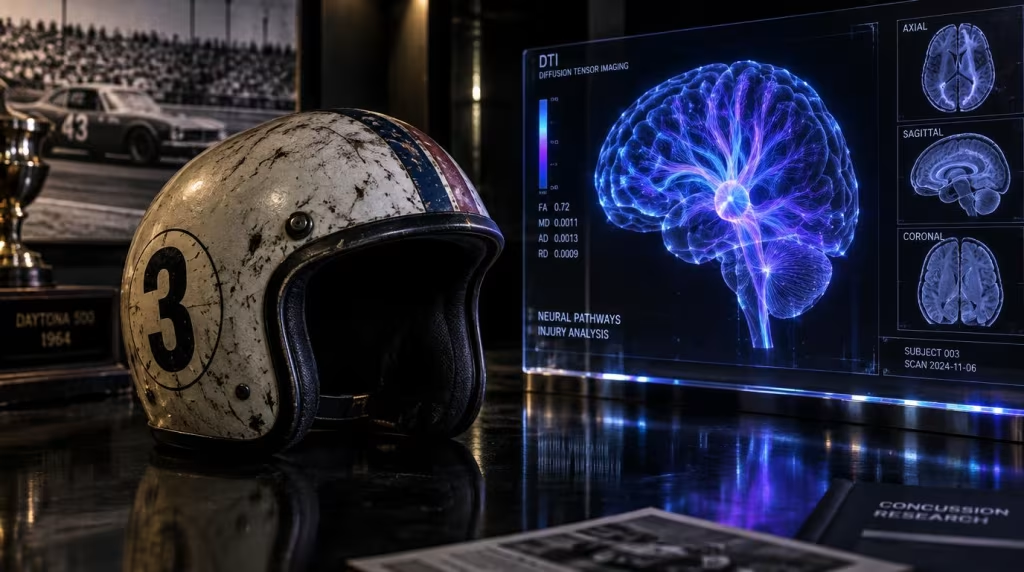
The groundbreaking posthumous brain study results of the NASCAR legend have highlighted the severe, long-term neurological dangers of vintage stock car racing.
Heartbreaking Fred Lorenzen Brain Study Results: NASCAR Legend Posthumously Diagnosed with CTE
🏁 Quick Takeaways: A Racing Legend’s Final Tragedy
The roaring engines, the scent of burning rubber, and the relentless pursuit of speed have always defined the thrilling, yet perilous world of NASCAR. For decades, the focus of racing safety was purely structural—reinforcing roll cages, mandated helmets, and implementing safer barriers. However, the recent release of the fred lorenzen brain study results has shifted the spotlight to an invisible, insidious danger that lingers long after the checkered flag is waved: neurological trauma.
Fred Lorenzen, one of the greatest wheelmen in the history of American stock car racing, was posthumously diagnosed with Stage 3 Chronic Traumatic Encephalopathy (CTE). As reported in a heartbreaking exclusive by USA Today, this revelation not only provides medical closure for a family that endured decades of suffering, but it also serves as a chilling wake-up call for the entire motorsports industry.
Decoding the Fred Lorenzen Brain Study Results
The confirmation of CTE cannot be made while a patient is alive; it requires a comprehensive posthumous examination of brain tissue. Following Lorenzen’s passing, his family bravely donated his brain to leading neurological researchers, desperately seeking answers for the drastic cognitive and physical decline that shadowed the latter half of his life.
What the Researchers Found
The fred lorenzen brain study results were definitive and sobering. Neuropathologists confirmed the presence of Stage 3 CTE (on a four-stage scale). CTE is a progressive degenerative brain disease found in individuals with a history of repetitive brain trauma—most commonly associated with NFL players, boxers, and military veterans.
For a NASCAR driver from the 1960s, the brain trauma did not come from tackles, but from the brutal physics of stock car racing. In Lorenzen’s era, cars lacked the advanced shock-absorbing technologies of today. Every crash into a concrete wall, every violent spin, and the constant, jarring vibrations of driving a heavy machine at 150 mph contributed to cumulative micro-traumas inside his skull.
Who Was “The Golden Boy”? A Look at a Legendary Career
To fully grasp the tragedy of the fred lorenzen brain study results, one must understand the heights from which he fell. Fred Lorenzen was not just a driver; he was a phenomenon. Throughout the 1960s, he was the face of NASCAR, earning the nickname “The Golden Boy” due to his movie-star looks, undeniable charisma, and ferocious talent behind the wheel.
| Career Highlights | Fred Lorenzen’s Legacy |
|---|---|
| Active Era | Dominant throughout the 1960s. |
| Major Wins | Daytona 500 (1965), World 600. |
| Milestone | First NASCAR driver to earn over $100,000 in a single season. |
| Hall of Fame | Inducted into the NASCAR Hall of Fame on January 30, 2015. |
He famously drove for the Holman-Moody Ford team, securing 26 wins in just 158 starts—an astonishing winning percentage. However, he abruptly retired at his absolute peak in 1967, citing stomach ulcers and burnout. He attempted a brief comeback in the 1970s, but the golden era had passed. What no one knew at the time was that the physical toll of his spectacular career was quietly setting a neurological time bomb.
“35 Years of Constant Heartbreak”: The Family’s Silent Struggle
The USA Today report provided an incredibly poignant look into the private agony of the Lorenzen family. For decades before the fred lorenzen brain study results were finalized, his children, Chris Lorenzen and Amanda Lorenzen-Gardstrom, watched their vibrant, heroic father slowly fade away.
The Onset of Dementia
The symptoms of CTE often manifest years, or even decades, after the trauma ceases. For Fred, the decline began with subtle memory issues and mood changes, which eventually cascaded into severe dementia. The man who possessed the hyper-reflexes required to navigate a 3,000-pound race car at top speeds eventually lost the ability to walk.
He spent his final years living in a nursing home, requiring around-the-clock medical care. The family described this prolonged period of cognitive and physical deterioration as “35 years of constant heartbreak.” The CTE diagnosis finally gave a name to the invisible enemy that had stolen their father.
The 2015 Hall of Fame Induction
One of the most emotional moments in NASCAR history occurred on January 30, 2015, during Lorenzen’s induction into the NASCAR Hall of Fame in Charlotte, North Carolina. While his peers, like Bobby Allison and Richard Petty, celebrated, Fred was a prisoner in his own mind.
As his son Chris heartbreakingly noted to USA Today, there was a “zero-percent chance” that Fred could deliver an acceptance speech. The dementia had settled in too deeply. Instead, Chris stood at the podium, speaking on behalf of a father who was physically present but neurologically lost to the disease. The recent release of the brain study results adds a profound layer of sorrow to the photographs of that night.

What is CTE and Why is it Plaguing Motorsports?
The fred lorenzen brain study results mark a critical juncture for motorsports. While CTE is heavily discussed in the context of the NFL and combat sports, NASCAR has largely escaped the neurological spotlight until now.
CTE is caused by a build-up of an abnormal protein called *tau* in the brain, which slowly kills brain cells. In racing, drivers are subjected to massive G-forces. During a crash, even if the driver’s head does not strike the steering wheel, the rapid deceleration causes the brain to slosh violently inside the skull.
The Evolution of NASCAR Safety
Lorenzen raced in an era of open-face helmets, rudimentary seatbelts, and concrete retaining walls. There were no SAFER (Steel and Foam Energy Reduction) barriers to absorb the kinetic energy of a crash. There was no HANS (Head and Neck Support) device to keep the skull tethered to the spine during an impact.
While modern NASCAR is exponentially safer—thanks to tragic lessons learned from the deaths of Dale Earnhardt and others—the issue of concussions remains. Recent years have seen modern stars like Dale Earnhardt Jr. and Kurt Busch forced into early retirement due to severe concussion-like symptoms. Lorenzen’s posthumous diagnosis validates the struggles of modern drivers advocating for better concussion protocols.
Conclusion: A Legacy Redefined by Science
The fred lorenzen brain study results do not diminish his legacy as “The Golden Boy” of NASCAR; rather, they recontextualize his life as a story of unimaginable sacrifice. He gave his body and his mind to a sport that, at the time, did not fully understand the consequences of the entertainment it provided.
By publicly sharing this diagnosis, Chris Lorenzen and Amanda Lorenzen-Gardstrom have performed an incredible act of advocacy. They have ensured that Fred Lorenzen’s final contribution to racing is not a trophy, but a vital piece of medical data that could save the minds of future generations of drivers.
Frequently Asked Questions (FAQ)
What were the Fred Lorenzen brain study results?
Following a posthumous examination of his brain, researchers confirmed that NASCAR Hall of Famer Fred Lorenzen suffered from Stage 3 Chronic Traumatic Encephalopathy (CTE), a degenerative brain disease caused by repetitive head trauma.
Is Fred Lorenzen the first NASCAR driver diagnosed with CTE?
Yes. According to reports, Fred Lorenzen is the first former NASCAR driver to be officially diagnosed with CTE posthumously, marking a significant medical milestone in the study of motorsports head injuries.
Why was Fred Lorenzen called “The Golden Boy”?
During the 1960s, Lorenzen was nicknamed “The Golden Boy” due to his immense talent, high winning percentage, movie-star charisma, and his status as the first NASCAR driver to earn over $100,000 in a single season.
Who gave Fred Lorenzen’s Hall of Fame speech?
When Fred Lorenzen was inducted into the NASCAR Hall of Fame on January 30, 2015, he was suffering from severe dementia and mobility loss. Consequently, his son, Chris Lorenzen, delivered the acceptance speech on his behalf.