Dodgers Today: NLCS Score, Schedule & Game 4 Preview
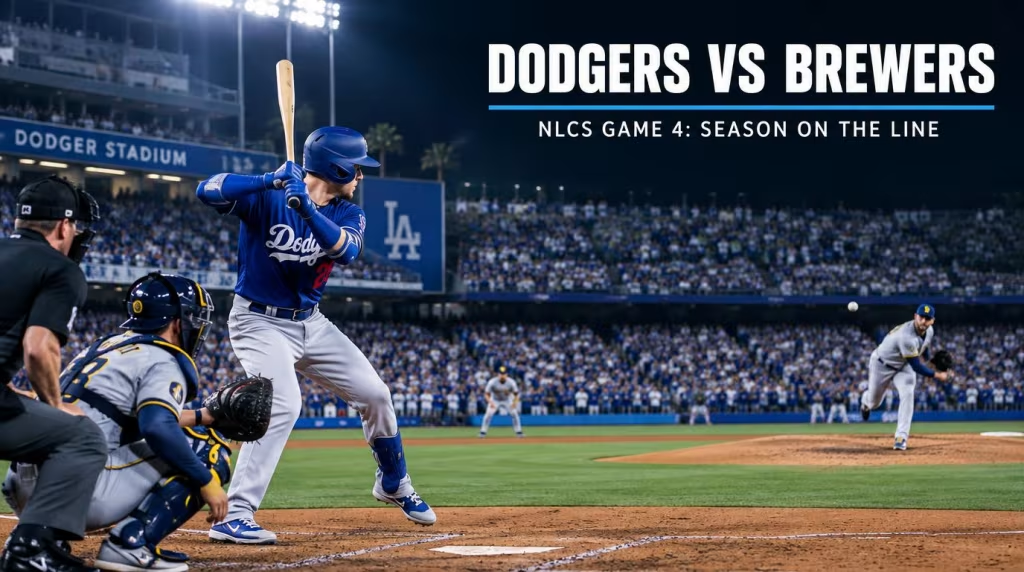
The Dodgers face a crucial Game 4 as Milwaukee looks to finish its NLCS sweep.
Dodgers Face a Must-Respond Moment Against the Brewers: NLCS Score, Game 4 Preview and Key Storylines
Key Takeaways
- The Milwaukee Brewers won the first three games of the 2026 National League Championship Series, putting the Dodgers on the brink of elimination.
- Milwaukee won Game 3 by 6–2 after Jake Bauers and Garrett Mitchell hit important home runs.
- Los Angeles needs better production with runners on base and a strong outing from starter Tyler Glasnow in Game 4.
- Game 4 is scheduled for October 15 at Dodger Stadium, with coverage on FS1 and FOX One in the United States.
The Los Angeles Dodgers entered the 2026 National League Championship Series with championship experience, an expensive roster, and a familiar postseason opponent. But the Milwaukee Brewers have turned that expected showdown into a serious test. After three straight defeats, Los Angeles is fighting to keep its season alive while Milwaukee moves within one win of the World Series.
The latest Dodgers storyline is about much more than the final score. It is about missed opportunities, timely power hitting, pitching decisions, and whether a star-heavy lineup can deliver when the pressure rises. Fans searching for the Dodgers game today, the Dodgers score, or the Brewers-Dodgers schedule need to understand both the results already recorded and the challenge ahead.
Game 4 is scheduled for Thursday, October 15, at Dodger Stadium. The Dodgers must win to extend the series. Milwaukee, meanwhile, has an opportunity to complete a sweep and reach the World Series for the first time since 1982. The official MLB postseason schedule lists the upcoming game and broadcast details.
Dodgers vs. Brewers: Latest NLCS Score and Series Situation
Milwaukee has controlled the opening three games through timely hitting and effective relief pitching. The Dodgers have had moments of resistance, but they have not consistently turned baserunners into runs. That distinction has become central to the series.
The first three games at a glance
| Game | Result | Key storyline |
|---|---|---|
| Game 1 | Brewers 2, Dodgers 1 | Milwaukee produced the decisive runs in a close opener. |
| Game 2 | Brewers 7, Dodgers 4 | William Contreras drove the rally with three hits and three RBIs. |
| Game 3 | Brewers 6, Dodgers 2 | Jake Bauers and Garrett Mitchell homered as Milwaukee moved ahead 3–0. |
Sources: Reuters on Game 1, Reuters on Game 2, and Game 3 recap.
The sequence explains why the Dodgers are under such pressure. Game 1 was decided by one run, Game 2 by three, and Game 3 by four. Los Angeles has not been blown out in every contest, but it has repeatedly lost the moments that shape postseason games.
In Game 2, Contreras helped change the direction of the contest with a game-tying home run and a go-ahead single. Milwaukee finished with 12 hits, while its bullpen retired all 15 batters it faced. The Dodgers could not recover after their early advantage disappeared. Reuters’ Game 2 report details the rally and the pitching performance.
Game 3 brought the series to Los Angeles, where the Dodgers hoped their home crowd would help spark a turnaround. Instead, the Brewers won 6–2, leaving the defending champions with no room for another defeat.
What Happened in Game 3?
The Dodgers appeared to have a chance to regain control late in Game 3. Milwaukee starter Robert Gasser worked five scoreless innings, keeping Los Angeles off the board while his team looked for scoring opportunities.
The Dodgers finally moved ahead in the sixth inning when Will Smith delivered a two-run double. It was an important hit in a difficult postseason stretch, but the Dodgers could not build on it. Runners were left on base, and the offense failed to create another sustained rally.
The turning point arrived in the seventh. Jake Bauers hit a two-run homer off Blake Snell, giving Milwaukee the lead. Garrett Mitchell followed with another home run, increasing the damage and shifting the game decisively toward the visitors. Milwaukee added insurance runs later, while its bullpen closed the door.
Snell had struck out nine over six innings, according to the game recap, but the seventh-inning home runs changed the outcome. The lesson is familiar in October baseball: a pitcher can produce many good innings and still be undone by a small number of costly pitches.
For the Dodgers, the offensive issue was just as significant. Smith’s double showed that the lineup could produce a big hit, but one productive moment was not enough. A postseason team must string together quality at-bats, move runners, and take advantage of scoring chances before the opponent’s bullpen takes over.
The full Game 3 account is available through True Blue LA’s recap.
Dodgers Game Today: Game 4 Schedule and How to Watch
Game 4 is scheduled for Thursday, October 15, at Dodger Stadium. The game is listed for 9 p.m. Eastern Time, or 6 p.m. Pacific Time, with coverage on FS1, FOX Deportes, and FOX One. Start times and broadcast listings can change, so fans should verify the latest information with the official MLB postseason schedule or FOX’s NLCS coverage page.
| Game information | Details |
|---|---|
| Matchup | Milwaukee Brewers vs. Los Angeles Dodgers |
| Date | Thursday, October 15, 2026 |
| Venue | Dodger Stadium, Los Angeles |
| Scheduled start | 9 p.m. ET / 6 p.m. PT |
| U.S. television | FS1 |
| Streaming | FOX One |
| Series situation entering Game 4 | Brewers lead 3–0 |
The scheduled time is in U.S. time zones. International viewers should check their local sports listings and the streaming services available in their country; U.S. broadcasting rights do not automatically mean a service will be available worldwide.
Fans looking up “what channel is the Dodgers game on?” should also distinguish between the scheduled broadcast and the final score. Before first pitch, listings show the planned game. After the game, MLB’s official scoreboard provides the confirmed result.
Why the Dodgers’ Offense Must Respond
Los Angeles has enough established hitters to make any opposing pitcher work, but reputation does not produce runs by itself. The Brewers have repeatedly found ways to limit the Dodgers’ biggest opportunities, and the lineup needs a more consistent approach.
Shohei Ohtani faces a difficult postseason stretch
Ohtani has been a central part of the Dodgers’ identity, making his postseason struggles a major talking point. Reuters reported before Game 3 that he had collected only three singles in 20 postseason at-bats and had been dealing with right-biceps and left-knee issues. He moved to sixth in the batting order for that game, a notable change from his usual position near the top. Reuters’ lineup report explains the adjustment.
A change in batting order does not automatically solve a hitting problem. It can, however, alter the pressure on a player and give the manager a different way to structure the lineup. The key question is whether Ohtani can make consistent contact, control the strike zone, and generate hard-hit balls without forcing an outcome.
The Dodgers also need contributions from Mookie Betts, Freddie Freeman, Kyle Tucker, Will Smith, and the rest of the lineup. One star cannot carry an entire offense through every game. Milwaukee’s pitchers can attack a lineup differently when hitters behind the main threats are not converting opportunities.
Better situational hitting matters more than one home run
The Dodgers do not necessarily need a home run every time they reach base. They need productive at-bats in the situations that determine close games.
That means avoiding strikeouts with runners in scoring position, taking walks when pitchers miss the zone, advancing runners when a hit is unavailable, and making the defense execute under pressure. A two-out single can be more valuable than a solo home run when the team is trying to build a rally.
Los Angeles must also avoid chasing pitches outside the strike zone simply because the series is slipping away. Aggressive swings can change a game, but impatient at-bats can help a pitcher work quickly and preserve the bullpen.
Tyler Glasnow and the Dodgers’ Pitching Challenge

Tyler Glasnow is listed as the Dodgers’ scheduled starter for Game 4. The right-hander gives Los Angeles a chance to compete through strikeouts and high-quality innings, but he will need support from the offense and relief corps.
The broader pitching question is how the Dodgers manage the game if Glasnow exits early or runs into trouble. Postseason managers must balance the desire to win immediately against the need to preserve relievers for later innings. With the season at stake, that balance becomes especially difficult.
Milwaukee has shown it can score against elite pitching when it identifies a mistake. Bauers’ Game 3 home run was a clear example: one sequence changed the game after Snell had produced a strong stretch. Glasnow will need to limit free passes, avoid predictable patterns, and keep the ball away from dangerous hitting zones.
Los Angeles cannot rely on pitching alone. Even an excellent start would not guarantee a win if the lineup again fails to turn scoring chances into runs. The best route is complementary baseball: early offense, controlled innings, clean defense, and timely bullpen decisions.
Why Milwaukee Has Put the Dodgers on the Edge
The Brewers’ advantage is not simply that they have won three games. They have won in different ways. The opener was a narrow contest, Game 2 featured a comeback, and Game 3 turned on late power hitting. That variety makes Milwaukee harder to prepare for.
William Contreras has been a key offensive contributor, while Bauers and Mitchell supplied the decisive home runs in Game 3. Milwaukee’s relief pitchers have also limited the Dodgers’ ability to recover once the starting pitcher leaves.
The Brewers finished the regular season with an MLB-best 103 wins, according to the series preview from Brew Crew Ball. That record does not guarantee postseason success, but it reflects the consistency that helped Milwaukee reach this stage.
Their approach has been disciplined: capitalize when the Dodgers make mistakes, protect leads, and keep pressure on the opposing lineup. If the Brewers continue to execute, they can complete the sweep. If they become careless, Los Angeles has the talent to make the series uncomfortable again.
What Would a Dodgers Comeback Require?
A team trailing three games to none in a best-of-seven series faces a narrow path. The Dodgers must win Game 4, then win each remaining game. There is no room for a split or a recovery after another loss.
A comeback would begin with a single win, not a dramatic prediction. Los Angeles needs to treat Game 4 as its own contest: prepare for Milwaukee’s pitching, attack mistakes without expanding the strike zone, and avoid giving away extra outs through defensive errors or poor baserunning.
Three factors deserve attention:
- Early scoring: Getting ahead could force Milwaukee to use its bullpen differently.
- Pitching efficiency: Glasnow and the relievers must avoid long innings and unnecessary walks.
- Composure under pressure: The Dodgers need to stay with their plan even if the first few innings do not go their way.
The Brewers have the advantage, and the Dodgers’ margin for error is gone. But the next game is still decided on the field. A focused performance can extend the series; another loss ends the Dodgers’ championship defense.
Dodgers FAQ
Did the Dodgers win Game 3 against the Brewers?
No. Milwaukee defeated Los Angeles 6–2 in Game 3 of the 2026 NLCS on October 14. The Brewers moved ahead 3–0 in the best-of-seven series after home runs by Jake Bauers and Garrett Mitchell. Game 3 recap.
When is the next Dodgers game?
Game 4 against the Milwaukee Brewers is scheduled for Thursday, October 15, 2026, at Dodger Stadium. The scheduled start is 9 p.m. Eastern Time, or 6 p.m. Pacific Time. Check the official MLB schedule for any changes.
What channel is the Dodgers game on tonight?
The scheduled U.S. broadcast for NLCS Game 4 is FS1, with Spanish-language coverage on FOX Deportes and streaming through FOX One. Availability can vary by location and subscription. Confirm current listings before the game.
How many games do the Brewers need to win to reach the World Series?
Entering Game 4, Milwaukee leads the series 3–0 and needs one more win to clinch the National League pennant. The Dodgers must win four straight games to take the series.
The Outlook: One Game at a Time
The Dodgers remain a talented club, but their season is now defined by execution rather than expectations. The first three games exposed issues in situational hitting and showed how quickly Milwaukee can punish mistakes. For the Brewers, the formula has been timely offense, disciplined pitching, and a bullpen that protects leads.
Game 4 gives Los Angeles one immediate objective: win and keep playing. Glasnow must set the tone, the hitters need to support him, and the defense must avoid giving Milwaukee extra opportunities. If the Dodgers can do those things, the series continues and the pressure shifts slightly.
If Milwaukee wins again, the Brewers will complete a sweep and move to the World Series. That is the reality facing both teams. For readers following the Dodgers game today, the score is only part of the story—the bigger question is whether Los Angeles can produce its most complete performance of the postseason when it matters most.